
See it in action / product tour
Follow one change through the decision.
Connect the proposed scope, affected records, alternative responses and evidence needed for an approval decision.
Actual application views and verified findings from synthetic local manufacturing records. The observed-record map and the two-option finding comparison are distinct demonstrations; neither approves a substitution.
01 / Change initiator
Name the proposal and its targets.
The synthetic industrial-grip proposal targets the assembly and its left-hand bushing. The Draft record names the proposed review scope before any alternative is qualified or submitted for approval.
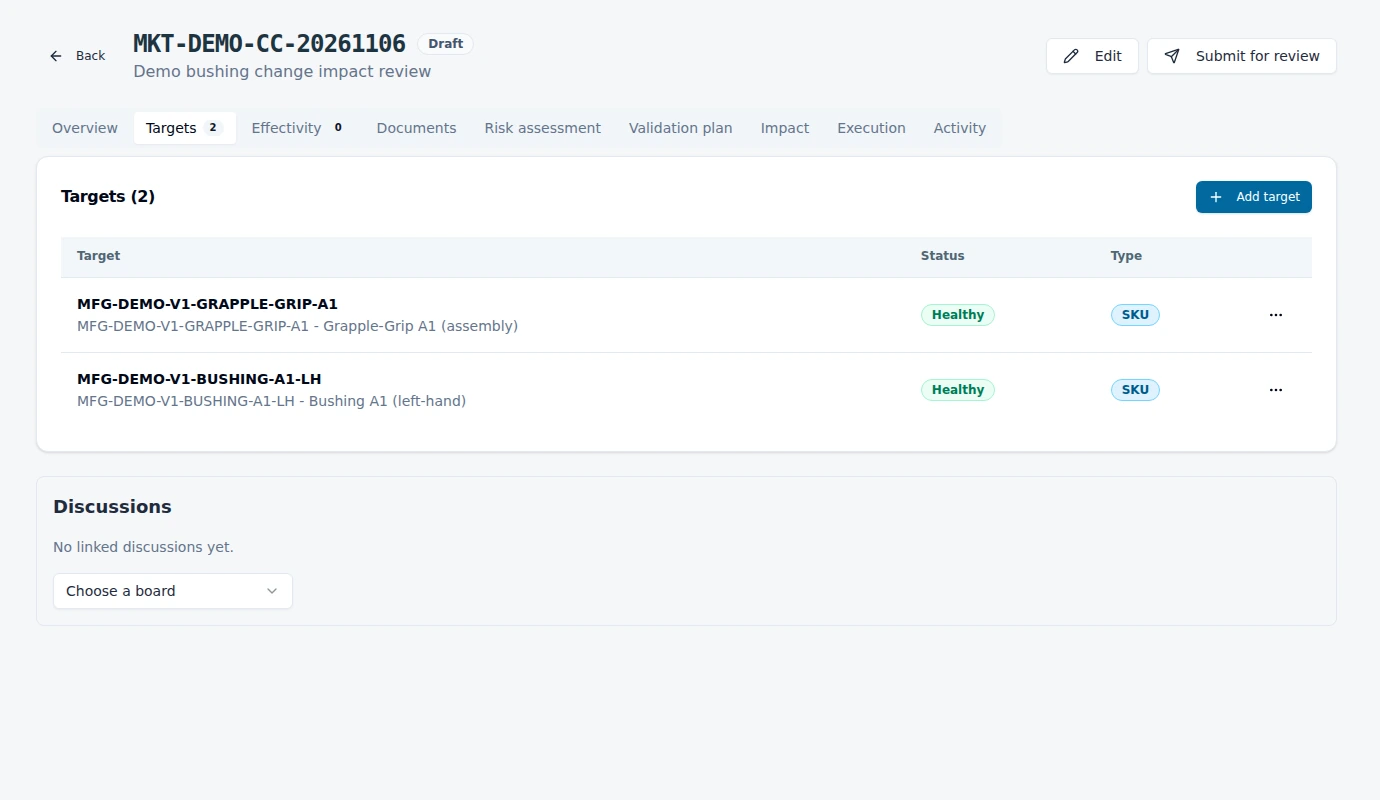
Describe the proposal and attach the records it concerns.
A draft change record with explicit targets.
02 / Engineering, quality and operations
Follow the affected work and the data gaps.
The observed-record map belongs to this same synthetic change control. Follow represented product, supplier, work-order and purchase-order connections. It shows the available operating context; the next chapter uses a separate case on this assembly to compare two proposed configurations.
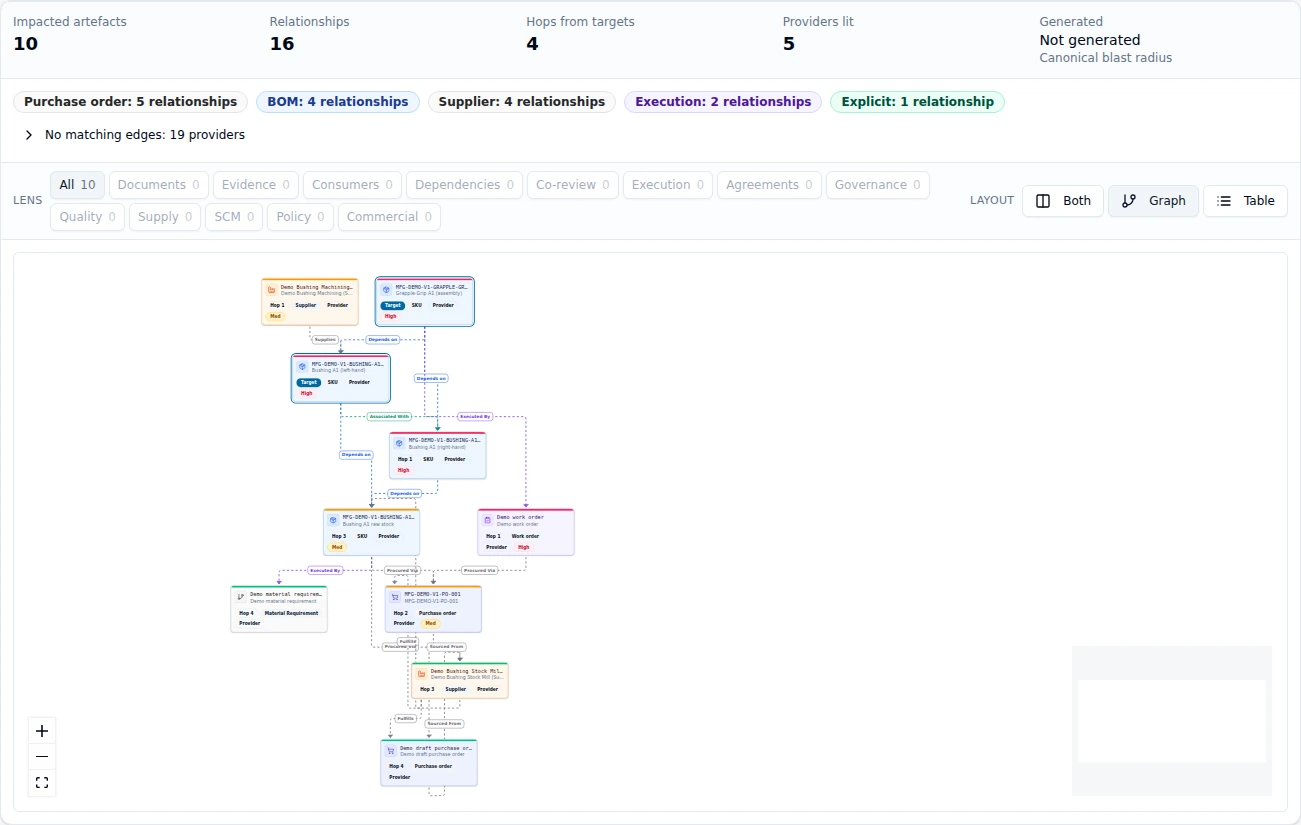
Review affected records, unresolved conditions and questions requiring domain expertise.
An impact assessment with its supporting context and limitations.
03 / Case owner and specialist reviewers
Review the reference and candidate together.
The synthetic case evaluates a reference that retains the resolved bushing and a candidate that proposes a different component. Both are proposed graph configurations. The verified findings below show differences and unresolved source limitations without treating the candidate as interchangeable or approved.
A proposed bushing substitution.
The planner question asks what changes if a bushing is replaced and which evidence needs review. The reference retains the resolved component; the candidate proposes a different component from the synthetic assembly.
| Finding family | Reference | Candidate |
|---|---|---|
| Impact findings | 8 | 7 |
| Data gaps | 1 | 1 |
| Source-readiness findings | 24 | 24 |
| Total findings | 33 | 32 |
The machining supplier's impact classification changes from Low in the reference to Medium in the candidate. The work-order finding stays High. These classifications identify review questions; they do not establish that the candidate is interchangeable or approved.
Each option has 24 source-readiness findings and one data gap. The run could not verify the data provider's version. Twenty-eight comparison rows remain unknown or limited. The reviewer needs to resolve the applicable gaps before relying on a conclusion.
Compare the options using the actual available evidence. Record assumptions and unresolved questions before choosing a response.
A comparison supporting a reviewable recommendation.
04 / Change owner and authorized approvers
Bring the analysis back to the controlled change.
Return to the controlled change and review its draft risk assessment, mitigation and verification plan. In this demonstration, engineering must assess fit and function and quality must review the evidence. No physical test, qualification, signed approval or effectivity decision has been completed.
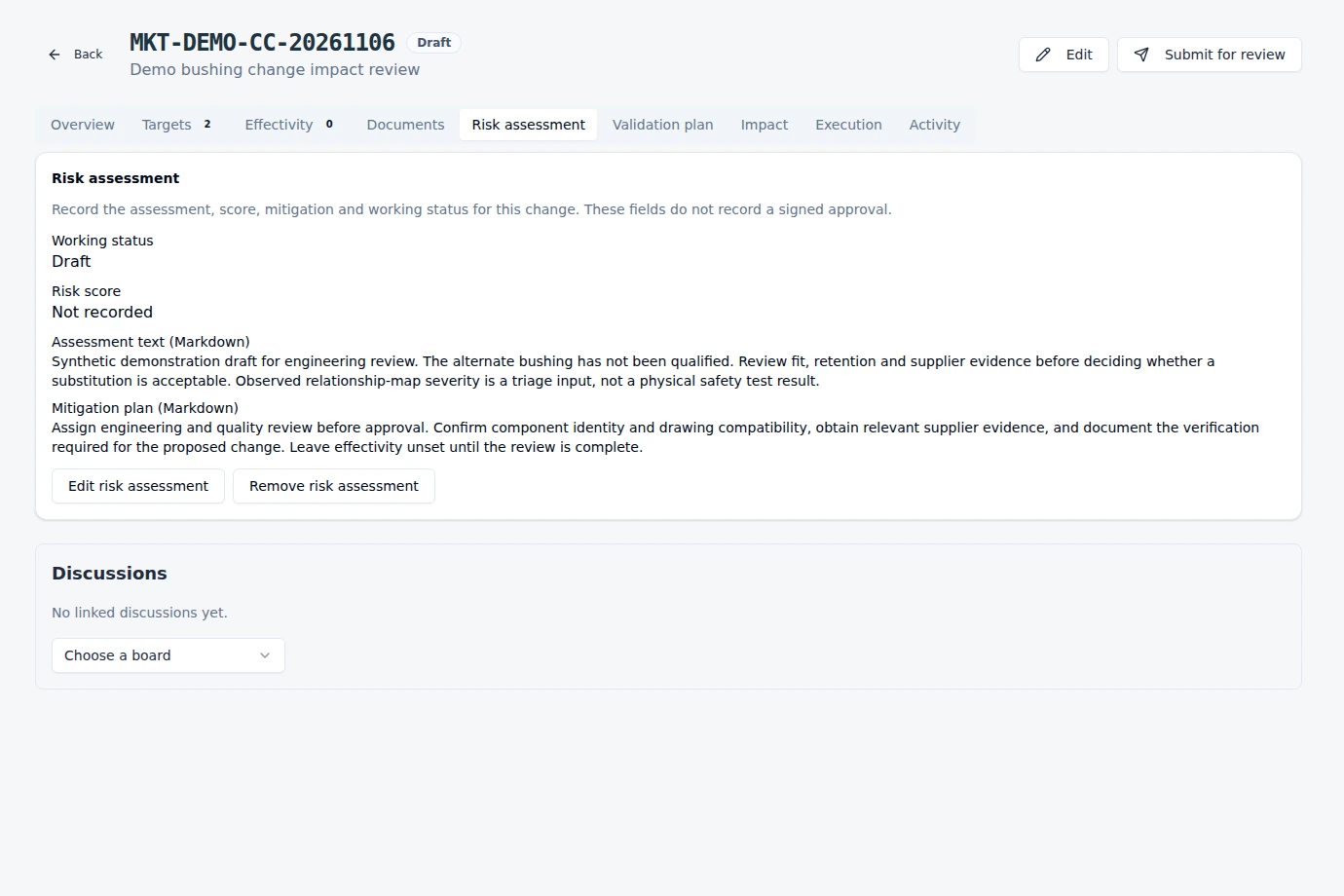
Resolve required review items and submit the applicable scope and evidence for approval.
A controlled review package and the conditions for subsequent execution.
A proposal becomes a reviewable decision.
The scope, impact, comparison and supporting evidence are available to the people who need to authorize the next step. Execution follows the approved change and its applicable conditions.
Start with your workflow
See this workflow with your team.
Tell us about the records, people and decision involved in your process. We will frame the walkthrough around that work.
Trace your proposed change